

Advanced calculus is a fundamental subject in mathematics that deals with the study of functions, limits, and infinite series. It is a crucial tool for scientists, engineers, and mathematicians to model and analyze complex systems. In this article, we will delve into the world of advanced calculus problems, providing step-by-step solutions to some of the most challenging problems in the field. Our goal is to provide a comprehensive understanding of the subject, highlighting key concepts, and demonstrating how to apply them to solve complex problems.
Key Points
- Understanding of limits, continuity, and differentiability of functions
- Knowledge of infinite series, including convergence tests and power series
- Familiarity with differential equations, including separable and linear equations
- Ability to apply calculus to real-world problems, including optimization and physics
- Strategic approach to problem-solving, including identifying theorems and techniques
Introduction to Limits and Continuity

Limits and continuity are fundamental concepts in calculus, forming the foundation of more advanced topics such as differentiation and integration. A limit represents the value that a function approaches as the input (or independent variable) gets arbitrarily close to a certain point. Continuity, on the other hand, refers to the property of a function being continuous at a point, meaning that the function’s graph has no gaps or jumps at that point.
Problem 1: Evaluating Limits
Evaluate the limit as x approaches 2 of the function f(x) = (x^2 - 4) / (x - 2). This problem requires the application of limit properties, including factoring and canceling out terms.
| Step | Explanation |
|---|---|
| 1 | Factor the numerator: x^2 - 4 = (x + 2)(x - 2) |
| 2 | Cancel out the common term (x - 2) |
| 3 | Evaluate the limit: lim (x→2) (x + 2) = 2 + 2 = 4 |

Infinite Series and Convergence Tests
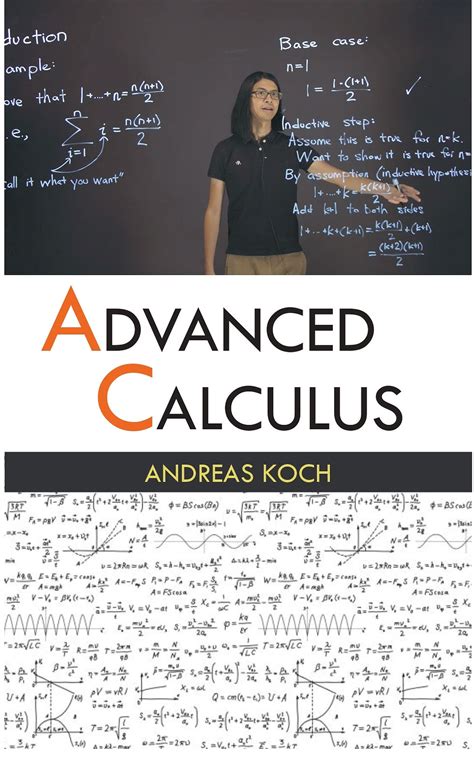
Infinite series are sums of infinite terms, often used to represent functions in a more compact form. Convergence tests, such as the ratio test, root test, and integral test, help determine whether an infinite series converges or diverges.
Problem 2: Convergence of a Series
Determine whether the series ∑(1/n^2) from n=1 to infinity converges or diverges. This problem requires the application of the p-series test, which states that the series ∑(1/n^p) converges if p > 1 and diverges if p ≤ 1.
The series ∑(1/n^2) is a p-series with p = 2, which is greater than 1. Therefore, the series converges.
Differential Equations and Applications
Differential equations are equations that involve an unknown function and its derivatives. They are used to model a wide range of phenomena, including population growth, chemical reactions, and electrical circuits.
Problem 3: Solving a Differential Equation
Solve the differential equation dy/dx = 2x, given the initial condition y(0) = 1. This problem requires the application of separation of variables and integration.
| Step | Explanation |
|---|---|
| 1 | Separate the variables: dy = 2x dx |
| 2 | Integrate both sides: ∫dy = ∫2x dx |
| 3 | Evaluate the integrals: y = x^2 + C |
| 4 | Apply the initial condition: 1 = 0^2 + C => C = 1 |
| 5 | Write the final solution: y = x^2 + 1 |
Real-World Applications of Advanced Calculus
Advanced calculus has numerous applications in various fields, including physics, engineering, economics, and computer science. It is used to model complex systems, optimize functions, and make predictions about future behavior.
Problem 4: Optimization Problem
A company wants to maximize its profit by producing a certain number of units of a product. The profit function is given by P(x) = 200x - 2x^2, where x is the number of units produced. Find the maximum profit using calculus.
This problem requires the application of optimization techniques, including finding the critical points and determining the nature of the critical points using the second derivative test.
| Step | Explanation |
|---|---|
| 1 | Find the critical points: P'(x) = 200 - 4x = 0 => x = 50 |
| 2 | Apply the second derivative test: P''(x) = -4 < 0, so x = 50 is a maximum |
| 3 | Evaluate the maximum profit: P(50) = 200(50) - 2(50)^2 = 5000 |
What is the difference between a limit and a derivative?
+A limit represents the value that a function approaches as the input gets arbitrarily close to a certain point, while a derivative represents the rate of change of a function with respect to its input.
How do I determine the convergence of an infinite series?
+To determine the convergence of an infinite series, you can use various tests, such as the ratio test, root test, or integral test. These tests help you determine whether the series converges or diverges.
What is the purpose of differential equations in real-world applications?
+Differential equations are used to model complex systems and phenomena, such as population growth, chemical reactions, and electrical circuits. They help us understand and predict the behavior of these systems over time.
In conclusion, advanced calculus is a powerful tool for solving complex problems in various fields. By mastering the concepts of limits, continuity, infinite series, and differential equations, you can develop a deeper understanding of the world around you and make informed decisions in your personal and professional life. Remember to approach problems strategically, applying the appropriate techniques and theorems to arrive at a solution.